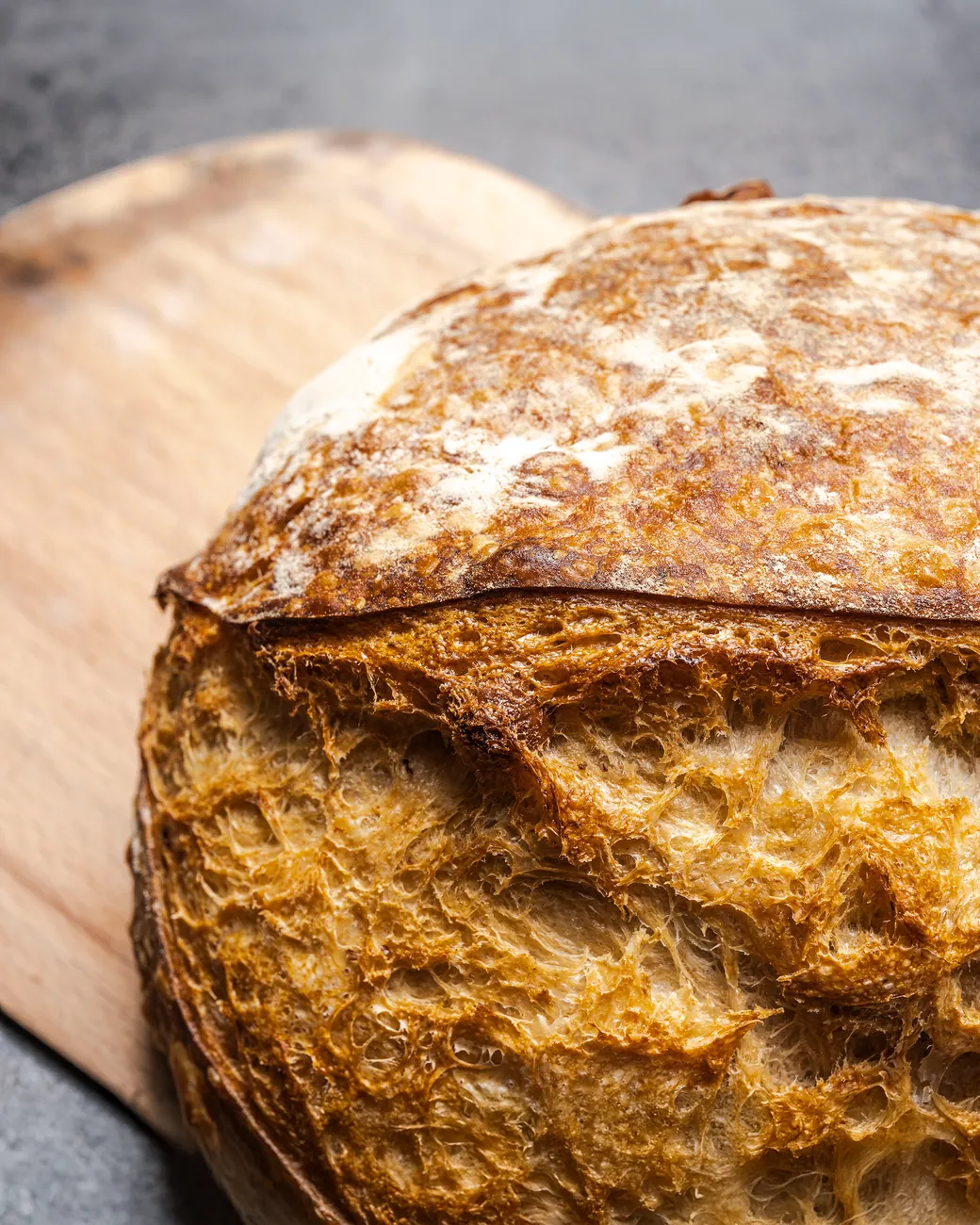
After days of feeding a starter and hours of folding and waiting, the oven is where all of it either comes together or comes apart in a rush. The bake is fast and dramatic compared with everything that came before. In the first minutes the dough leaps upward in what bakers call oven spring — a last surge of expansion as the trapped gas heats and swells and the yeast makes one final push before the heat kills it. Then the crust sets, browns, and crackles, and the inside firms into an open, springy crumb. Two things shape whether that goes well: the score you make just before the loaf goes in, and the steam that surrounds it for the first part of the bake. A good score directs the oven spring so the loaf opens where you want it to rather than bursting randomly along a weak seam. Steam keeps the crust soft long enough for that spring to happen, then a dry, hot finish gives you the deep color and shatter you're after. Neither is complicated, but both reward a little understanding.
Why we score at all
A scored loaf isn't just decoration, though a clean pattern is one of the quiet pleasures of the craft. The cut is functional. As the loaf springs in the oven, all that expanding gas has to escape somewhere. If you don't give it a deliberate opening, it will find the weakest point on the surface and blow out there — often along the bottom or side, leaving a lopsided, torn loaf. Scoring creates a controlled weak line so the dough opens along your cut, blooms outward into an "ear," and rises evenly. It's the difference between a loaf that expands on purpose and one that ruptures at random.
How to make the cut
Use something genuinely sharp — a razor blade, a dedicated lame, or a very keen knife. A dull edge drags and tears the surface instead of slicing it. Work quickly and confidently on cold dough straight from the fridge, which is firmer and easier to cut cleanly than a warm, slack loaf. For a single expansive opening, hold the blade at a shallow angle, almost lying against the surface, and make one long stroke a centimeter or so deep down the length of the loaf. That angled cut lifts a flap of dough that peels back and crisps into an ear. Simpler patterns — a single slash, a cross, a square — are easier to get right than intricate designs, and they open just as well.
The role of steam
Steam is the second half of a good bake, and it's the part home ovens most often lack. In the first ten minutes, moisture in the oven keeps the crust from setting too soon. A soft, damp crust can stretch as the loaf springs; a crust that dries and hardens early clamps down and chokes the rise. Steam also helps the surface gelatinize, which is what gives sourdough that glossy, deeply browned, crackling shell.
The easiest way to trap steam at home is to bake inside a preheated cast-iron pot with a lid — a Dutch oven. The dough releases its own moisture, the lid holds it in, and you get a built-in steam chamber for free. Bake covered for the first stretch, then lift the lid to let the crust dry and color.
A straightforward bake
Preheat the oven, with the pot inside, as hot as it will comfortably go — around 230 to 250°C. A long, thorough preheat matters: the stored heat in the pot is what drives the oven spring. When it's ready, turn the scored loaf into the hot pot, cover it, and bake.
- Covered, roughly 20 minutes: the trapped steam lets the loaf spring and open along the score.
- Uncovered, another 20 to 25 minutes: the crust dries, deepens to a rich brown, and crackles.
- Judge by color and sound: aim for a genuinely dark crust; a done loaf sounds hollow when you tap its base.
People routinely pull sourdough too early because a pale loaf looks finished. Push the color further than feels comfortable — a deep, almost mahogany crust carries much of the flavor, and the darker shell is what shatters so satisfyingly under a knife.
Then leave it alone
The hardest instruction in baking is to wait once the loaf is out. It is still cooking inside from residual heat, and the crumb is setting. Cut too soon and you'll find a gummy, pasty interior and a rush of steam that dries the loaf out. Let it cool on a rack for at least an hour — longer for a big loaf — until it's barely warm. Only then does the crumb finish, the crust settle, and the flavor round into what you worked all those hours for.
The reward for the wait
Scoring and baking take minutes, but they're where patience finally pays off in something you can see and hear: a loaf that bloomed along your cut, browned deep, and sings a little as it cools. Get the cut clean, trap the early steam, bake it darker than you think, and give it time to rest. Do that, and you'll pull real bread — crackling crust, open crumb, honest flavor — from an ordinary home oven.