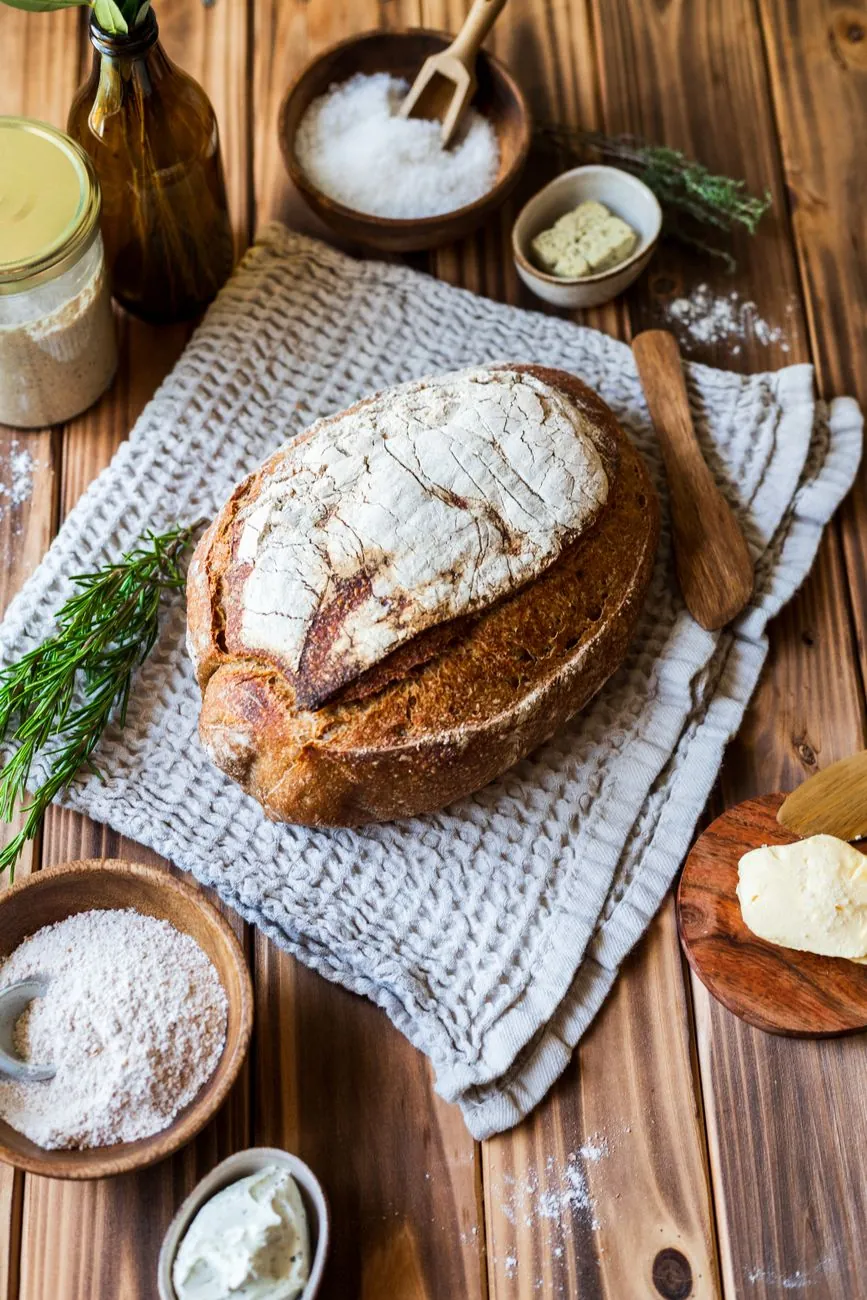
A sourdough starter is the one ingredient in this whole craft that you cannot buy off a shelf and forget about. It's alive — a loose community of wild yeast and friendly bacteria living in a paste of flour and water — and like anything alive, it wants feeding and a bit of attention. That sounds like a burden until you realize how little it actually asks. A tablespoon of the culture, some flour, some water, a few minutes once a day: that's the whole job. In return you get the leavening for every loaf you'll ever bake, plus the sour tang and the keeping quality that make sourdough what it is. People treat starters as mysterious, even temperamental, and pass around rules about spring water and specific flours and lunar timing. Almost none of it is necessary. A starter is remarkably tough. Once you understand what it's doing and why, keeping one alive becomes a small, steady habit rather than a source of worry.
Building one from scratch
You don't need a friend's starter or a mail-order culture. The wild yeast you need is already on the flour and in the air. To begin, stir together equal weights of flour and lukewarm water — say 50 grams of each — in a clean jar. Whole wheat or rye gets things going faster because the grain carries more microbes, so a spoonful of either mixed with white flour is a good start. Loosely cover the jar and leave it somewhere warm.
For the first day or two, not much happens. By day three you'll usually see a few bubbles and catch a sharp, slightly cheesy smell — that's the early bacteria waking up before the yeast catches up. Keep feeding it once a day: discard most of the jar, keeping a spoonful, and stir in fresh flour and water in equal weight. Somewhere around day five to seven the smell mellows into something pleasant and tangy, and the culture starts to double in size after each feed. That reliable rise is the signal it's ready to raise bread.
Feeding, and what a feed does
A feed is simply a meal. When you add fresh flour and water, you're giving the yeast and bacteria new sugars to eat. They ferment, multiply, produce gas and acid, and the starter rises and then falls as the food runs out. The whole point of keeping the feeds regular is to keep the population healthy and hungry, so that when you build dough it's full of active, vigorous yeast ready to work.
A simple ratio to remember is one part starter to one part water to one part flour by weight. Some bakers feed more flour and water relative to the old starter when they want to slow things down or refresh a neglected culture. The exact numbers matter less than consistency: pick a routine and stick with it, and your starter will behave predictably.
Room temperature, or the fridge
If you bake often, keep the starter on the counter and feed it once a day. It'll be lively and quick. If you bake once a week or less, that daily feeding is a chore you don't need. Put the jar in the refrigerator instead. The cold slows the culture almost to a standstill, and it will happily sit for a week or two between feeds. To bake, take it out a day ahead, feed it once or twice at room temperature until it's bubbling and rising again, and it's ready.
Reading the signs of health
A happy starter tells you exactly how it's doing. A few hours after a feed it should be domed and full of bubbles, roughly double its starting size, with a smell that's tangy and a little fruity or yogurt-like — never sharply unpleasant. If it rises and falls on a predictable schedule, it's in good shape.
The classic readiness test is the float: drop a small spoonful into a glass of water at the peak of its rise. If it floats, it's full of gas and ready to leaven dough. If it sinks, give it more time or another feed. It's not infallible, but it's a useful quick check when you're learning.
When something looks off
A layer of grayish liquid on top — bakers call it hooch — just means the starter is hungry and has run out of food. Pour it off or stir it in and feed as usual; nothing is wrong. A starter that smells strongly of acetone or nail polish is very hungry and over-acidic; a couple of generous feeds usually revives it. The one thing to take seriously is visible fuzzy mold or streaks of pink or orange. That's contamination, and the safe move is to discard the whole jar and begin again. It's rare, and easy to avoid by keeping utensils and the jar clean.
The habit, once it's yours
After a few weeks a starter stops feeling like a science project and starts feeling like a houseplant you happen to bake with. You'll know its rhythm — how fast it peaks, how it smells when it's ready, how long it can wait. Feed it, use it, and it will outlast almost anything else in your kitchen. Bakers pass starters down for decades, and there's no reason yours can't be one of them. It only ever needed flour, water, and a little of your attention.