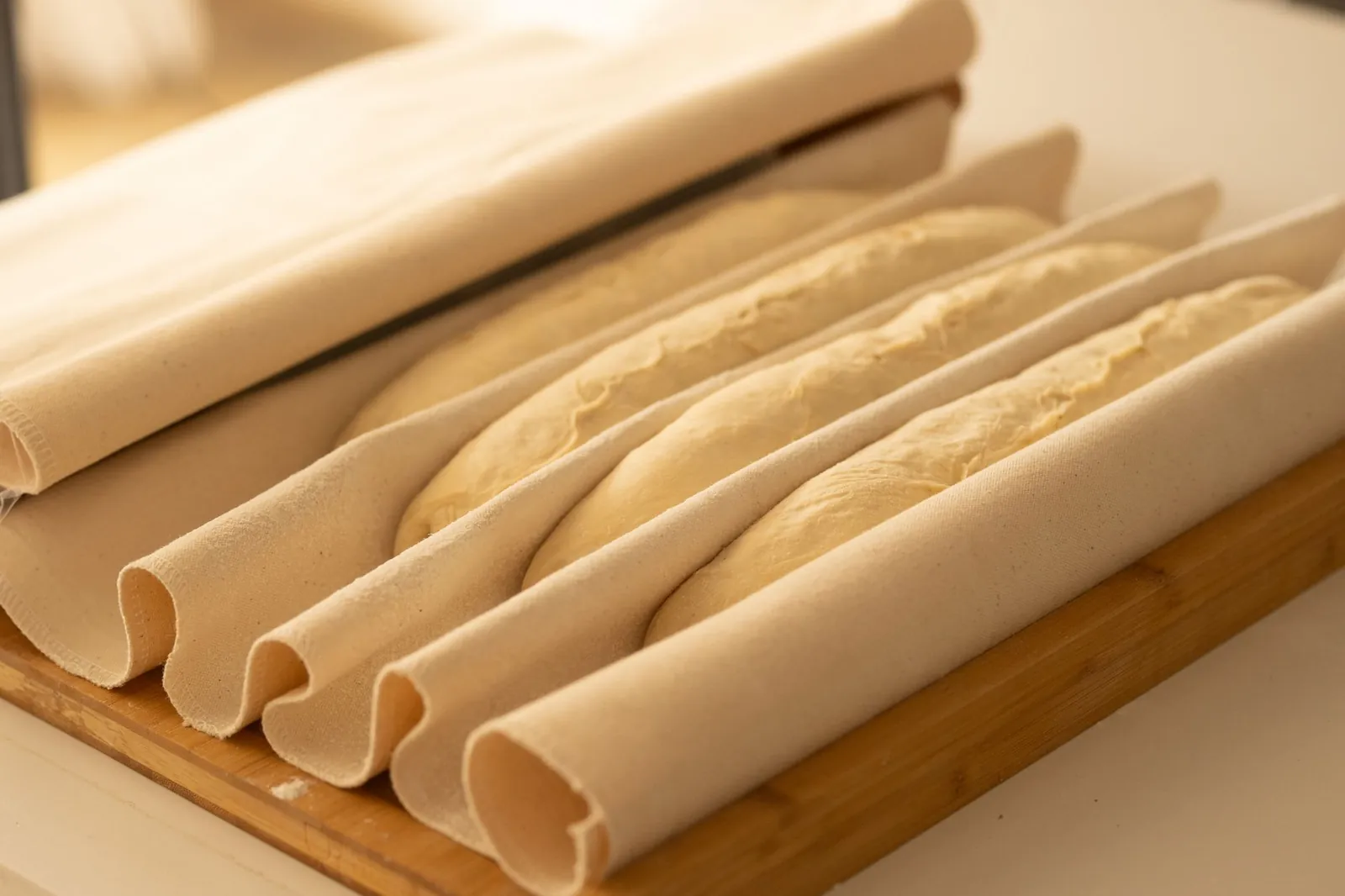
Bulk fermentation is the long stretch after you mix the dough and before you shape it, and it is quietly the most important part of making sourdough. This is where the loaf actually becomes bread. The yeast produces the gas that will lift it, the bacteria develop the sour, faintly nutty flavor, and the gluten builds into a web strong enough to trap all that gas. Get this stage right and almost everything downstream — the shaping, the score, the bake — falls into place. Get it wrong and no amount of skill later will rescue a loaf that fermented too little or too long. The trouble is that no recipe can hand you a reliable time for it, because fermentation runs on temperature and on the vigor of your particular starter, both of which vary from kitchen to kitchen and season to season. What you can learn is how to read the dough itself. Once you can see and feel what a properly risen dough is doing, you stop needing the clock, and you start baking bread that comes out the same every time.
What is actually happening
When you mix flour, water, salt, and active starter, you set two processes going at once. The yeast eats sugars and gives off carbon dioxide, which inflates thousands of tiny pockets throughout the dough. At the same time the bacteria produce acids that flavor the bread and slowly strengthen, then eventually weaken, the gluten. Your job during bulk is to catch the dough at the moment those forces are in balance: plenty of gas, plenty of flavor, and a gluten structure that's strong but not yet breaking down.
Time is only a rough proxy for all of this. At a warm 26°C the dough might be ready in four hours; in a cool kitchen at 20°C the very same dough could take seven or eight. That's why two bakers following the identical recipe get different results — their rooms are different. Learn to watch the dough, not the recipe's timeline.
The signs of a good rise
A dough that's fermented well shows a cluster of related signs. It grows noticeably in volume — commonly somewhere between a half and a full doubling, depending on the flour and hydration. The surface goes from rough and matte to smooth and faintly domed, sometimes dotted with small bubbles. The mass feels lighter and more billowy when you lift the bowl, and it jiggles a little, like something with air trapped inside. Nudge the edge and it should feel alive and elastic rather than dense and slack.
- Volume: a clear, visible increase — mark the starting level on the container so you can see it.
- Surface: smooth, slightly domed, sometimes bubbled at the edges.
- Texture: airy and jiggly when you shake the bowl gently.
- Aroma: pleasantly tangy and yeasty, not sharply sour or boozy.
Under, over, and just right
An under-fermented dough hasn't built enough gas or strength. It looks dense, feels heavy, and shows little growth. Bake it and you'll get a tight, gummy crumb and a loaf that barely rose. If yours looks like this, be patient — give it more time, and next loaf consider a warmer spot or a livelier starter.
An over-fermented dough has gone too far the other way. The bacteria have eaten into the gluten, so the dough turns slack, sticky, and soupy, loses its shape, and often smells strongly sour or alcoholic. It won't hold structure in the oven and spreads into a flat, dense loaf. The fix is to stop bulk sooner — err on the early side while you're learning, because a slightly under-risen loaf is far more pleasant than a collapsed one.
The poke and the jiggle
Two quick hands-on checks help you call the moment. For the jiggle, shake the bowl gently: a ready dough wobbles softly, showing the gas inside. For the poke, wet a finger and press lightly into the surface. Early in bulk the dent springs right back; when the dough is nicely risen it fills back slowly and only partway, leaving a soft impression. If the dent stays put and the dough sighs flat, you've likely gone too far.
Trust what you see
Reading the rise is the single skill that separates bakers who bake good sourdough occasionally from those who bake it on purpose. It takes a few loaves to calibrate your eye, and keeping a short note each time — room temperature, how long bulk took, how the crumb turned out — speeds that up enormously. Before long you'll glance at a bowl of dough, feel its weight, catch its smell, and simply know. That quiet certainty is worth every loaf it takes to earn it.